

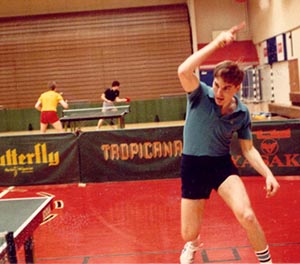
 Photo by Donna Sakai
Sol Schiff RIP
Sad news. "Mr. Table Tennis," Hall of Famer Sol Schiff, died yesterday at age 94. He was the 1934 U.S. Open Men's Singles Champion, the 1938 World Men's Doubles Champion (with Jimmy McClure), and a member of the 1937 World Men's Team Champion (the only time the U.S. ever won the title). He also served as USTTA (now USATT) president for many years. Here's his USA Table Tennis Hall of Fame profile. (It's only "Part 1" - hopefully Tim Boggan will write Part 2 at some point.) Note - A number of reports incorrectly have him as being 95, but he was born on June 28, 1917, passed away on February 26, 2012, and so wouldn't have turned 95 until June 28.
Leap Day
In honor of Leap Day, go practice your footwork. Or at least read about footwork - here are five articles I've written on footwork that you may browse while lounging in a chair sipping diet coke.
- Stepping Around the Backhand Corner
- Are You Backhand Oriented?
- A Forehand Stance While Blocking
- Are You a Tree or a Squirrel?
- Balance Leads to Feet-first Footwork
The one time I was faulted
As promised last week, here is the story of the only time my serve was ever faulted in a tournament.